Boring Stack is now something you can run
Boring Stack started as an AI coding skill.
You installed it, your coding agent received a set of defaults, and the next project was less likely to begin with infrastructure it had not earned.
That was useful, but abstract. You had to take the defaults on faith, because there was nothing to run.
Today Boring Stack becomes something you can see and run:
curl -fsSL https://boringstack.org/install.sh | bash
boringstack new myapp
cd myapp
boringstack dev
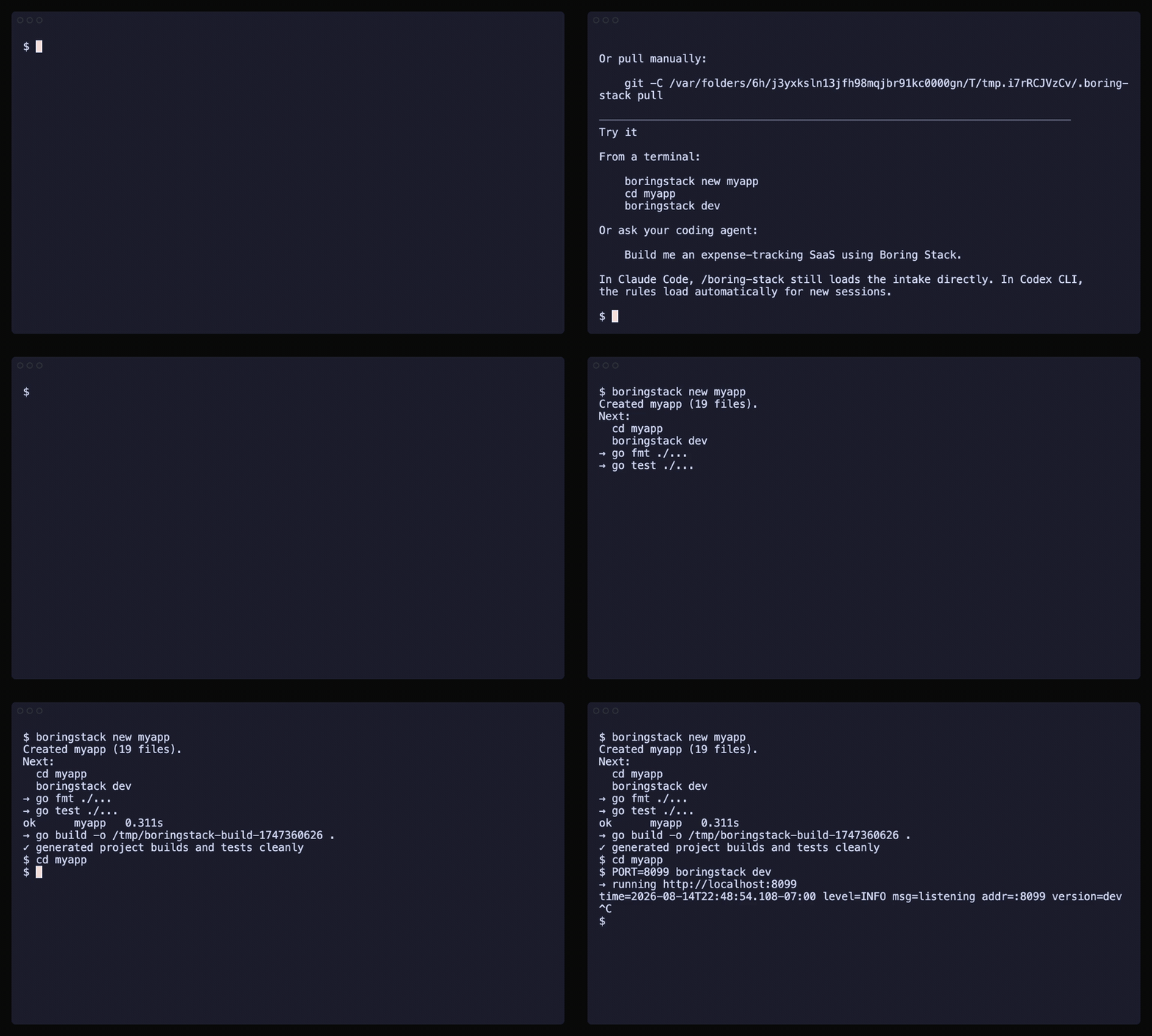
No jump cuts and no staged output: install Boring Stack, generate a tested Go app, and run it locally in one terminal session.
What the generator actually writes
boringstack new myapp creates 19 files: a small Go app and its test, HTML templates, static CSS, STACK.md, AGENTS.md, data and migration directories, and the production deploy files — Caddy, systemd, Litestream, and a shell deploy script you can read start to finish.
Then it runs go fmt, go test, and go build. It does not report success until those checks pass.
That last part is the difference worth arguing about. Most generators hand you a directory and wish you luck. This one refuses to claim success for something it has not compiled and tested.
It is a baseline, not a product
This is not a finished SaaS. It is the production-shaped starting point — the operational decisions already made, the deploy path already written down. From there you write the feature yourself, or you ask your coding agent:
Build me an expense-tracking SaaS using Boring Stack.
The CLI and the skill start from the same scaffold. The agent keeps going into the product slice.
What it needs, plainly
The installer clones or updates Boring Stack and builds the CLI when Go 1.22+ is available. If Go is missing, it says so, skips the CLI, and still installs the AI skill where supported.
boringstack doctor --deploy checks your local deploy prerequisites before you go looking for them at 2am. boringstack deploy uses that checked-in shell path, and it needs a target host and a health-check URL — it is not zero-configuration hosting. The host, the domain, the credentials, and the Litestream configuration are still yours to set up.
Boring Stack is MIT licensed and stays that way. Read every file, change the defaults, or tell us where they are wrong — the defaults only improve when people try to break them.
Try it: boringstack.org
